




TUNIS: Tunisia's President Kais Saied accused 460 businessmen of embezzlement as he launched a crackdown on corruption, days after grabbing power in what his opponents have dubbed a "coup".
Saied, who suspended parliament for 30 days and seized all executive powers on Sunday, slammed the "bad economic choices" made in recent years, during a meeting with a leader of the employers' federation UTICA.
In his comments late on Wednesday, the president singled out for criticism "those who plunder public money". Saied accused 460 businessmen of owing 13.5 billion dinars ($4.9 billion) to the state, citing the findings of a commission of inquiry into graft under former ruler Zine El Abidine Ben Ali.
"This money must be returned to the Tunisian people," he said, adding that he intends to offer the businessmen "judicial arbitration".
In exchange for dropping proceedings, the reimbursed sums of money would be injected into less developed parts of Tunisia.
Saied also asked traders and wholesalers to "lower prices" in a country where soaring inflation has eaten away at the purchasing power of consumers.
He also called for a revival of phosphate production, one of the country's few natural resources often used for agricultural fertiliser.
Gafsa Phosphate Company (CPG), a former flagship of the Tunisian economy, has seen its production collapse since the 2011 revolution due to a lack of investment and bouts of social unrest.
Saied raised suspicions of corruption that surround the industry, referring to "people in parliament who protect themselves with parliamentary immunity".
The president also announced the establishment of a crisis unit to manage the Covid-19 pandemic, supervised by a senior military officer. Tunisia is facing a new peak in the pandemic that has provoked the anger of the public in recent weeks.
The North African country of around 12 million people has one of the worst Covid death rates in the world, with 19,000 fatalities linked to the coronavirus.
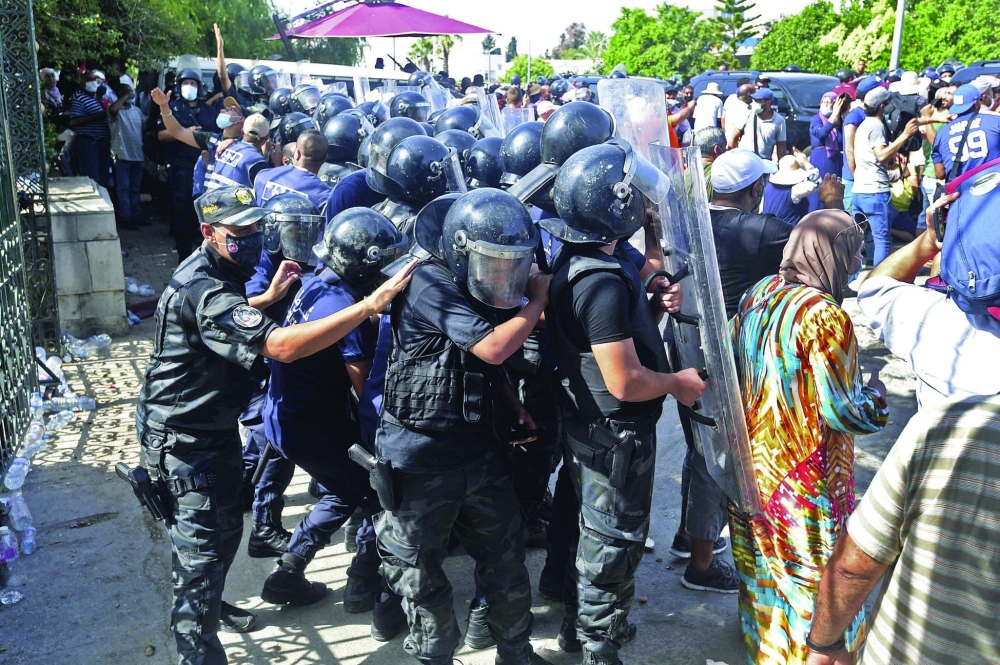
After months of political crisis, Saied seized power by invoking the constitution. The move was denounced as a 'coup d'etat' by his main opponents, the Ennahdha party.
Meanwhile, the Tunisian presidency fired the head of the national television channel on Wednesday after two guests were briefly banned from entering its studios to take part in a programme. The dismissal of Wataniya's CEO comes after president Kais Saied suspended parliament and sacked the prime minister on Sunday, in what opponents have labelled a coup.
On Monday, Qatari broadcaster Al Jazeera said police had forced its Tunis office to close, adding to fears that civil liberties and press freedom were at risk in the fledgling democracy.
The sacking of Wataniya's president Lassaad Dahech came hours after a journalism union representative and an activist were blocked from entering the channel's offices on Wednesday.
Amira Mohamed, vice president of the SNJT union, said she was stopped at the entrance by a security agent who was waiting for authorisation from the channel's management to allow her in.
Human rights activist Bassem Trifi, who was also stopped from entering, said he had been told it was not Wataniya's decision.
"The CEO of Wataniya told me he had received instructions from a military official to not let guests enter the television studios," he said.
But the ministry of defence and the president's office said they had not given any such instructions.
A few hours later, a statement from the president's office said Saied had issued a decree relieving Dahech of his responsibilities and instructing Awatef Dali to take over the role temporarily.
Saied has said his suspension of parliament and subsequent actions are justified under the constitution, which allows the head of state to take unspecified exceptional measures in the event of an "imminent threat". He has insisted he will protect civil liberties. - AFP
Oman Observer is now on the WhatsApp channel. Click here