




BRUSSELS: The European Commission on Wednesday put forward plans for the world’s first "carbon border tax" on imports of carbon-intensive goods, including steel, cement, fertilisers and aluminium, as part of a programme to meet its new climate target.
The border levy should be phased in from 2026, the Commission said. The measure is designed to protect European industries from competitors abroad not subject to the same carbon levies.
A transitional phase from 2023-25 will see importers monitoring and reporting their emissions, a Commission document said.
Under the proposal, importers will be required to buy digital certificates representing the tonnage of carbon dioxide emissions embedded in their imported goods.
Importers may be able to claim a reduction in carbon border costs if the goods have already been subject to a carbon levy in their country of manufacture.
It is part of the of their most ambitious plan yet to tackle climate change, aiming to turn green goals into concrete action this decade, and in doing so lead the way for the world's other big economies.
The European Commission, the EU executive body, set out in painstaking detail how the bloc's 27 countries can meet their collective goal to reduce net greenhouse gas emissions by 55 per cent from 1990 levels by 2030 - a step towards "net zero" emissions by 2050.
This will mean raising the cost of emitting carbon for heating, transport and manufacturing, taxing high-carbon aviation fuel and shipping fuel that have not been taxed before. It will consign the internal combustion engine to history.
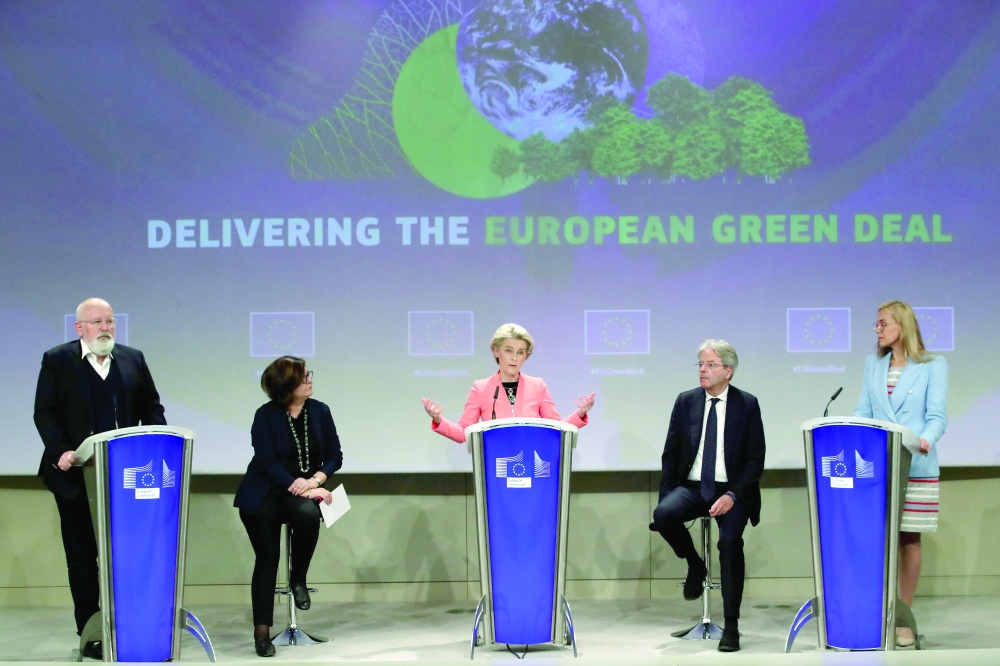
"We're going to ask a lot of our citizens. We're also going to ask a lot of our industries, but we do it for good cause," EU climate policy chief Frans Timmermans said.
"We do it to give humanity a fighting chance."
The "Fit for 55" measures will require approval by member states and the European parliament, a process that could take two years.
They are also likely to face intense lobbying from some industrial sectors, from poorer European member states that want to protect their citizens from price rises, and from more polluting countries facing a costly transition.
A diplomat from one EU country said the success of the package would rest on its ability to be realistic and socially fair, while not destabilising the economy.
"The aim is to put the economy on a new level, not to stop it," the diplomat said.
The EU produces only 8 per cent of global emissions, but hopes its example will elicit ambitious action from the world's other major economies when they meet in November in Glasgow for the next milestone UN climate conference.
"Europe was the first continent to declare to be climate neutral in 2050, and now we are the very first ones to put a concrete roadmap on the table," European Commission President Ursula von der Leyen said.
The package arrives days after California suffered one of the highest temperatures recorded on earth, the latest of a series of brutal heatwaves that have hit Russia, Northern Europe and Canada.
As climate change makes itself felt from the typhoon-swept tropics to the blowtorched bushlands of Australia, Brussels proposed a dozen policies to target most big sources of the fossil fuel emissions that trigger it, including power plants, factories, cars, planes and heating systems in buildings.
The EU has so far cut emissions by 24% from 1990 levels, but many of the most obvious steps, such as reducing reliance on coal to generate power, have been taken already.
The next decade will require bigger adjustments, with a long-term eye on 2050, by which date scientists say the world must have reached net zero carbon emissions to prevent climate change becoming catastrophic.
The measures follow a core principle: to make polluting more expensive and green options more attractive to the EU's 25 million businesses and nearly half a billion people.
Oman Observer is now on the WhatsApp channel. Click here