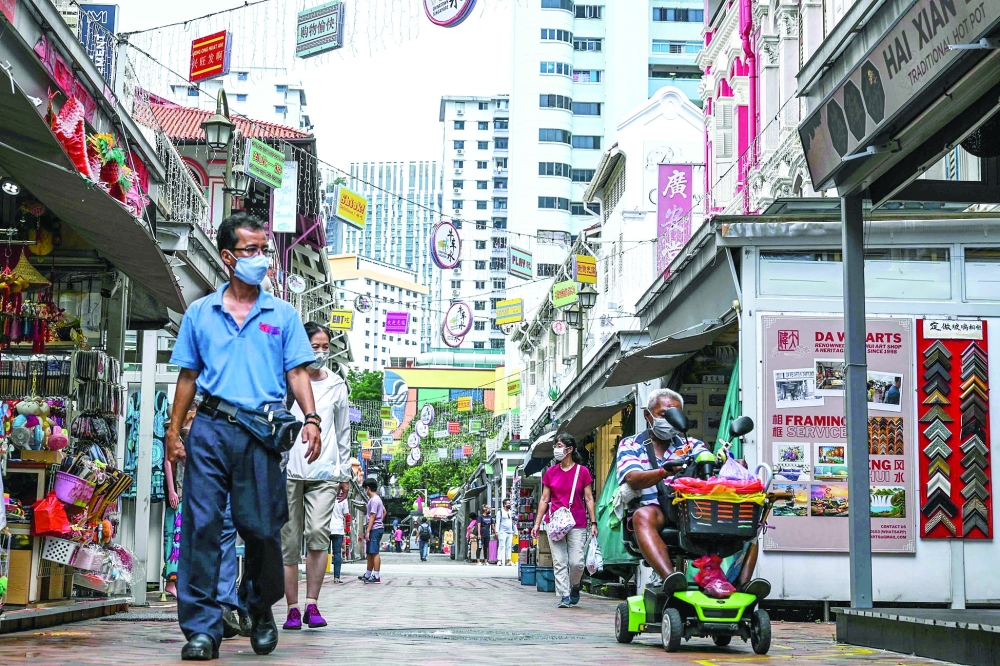
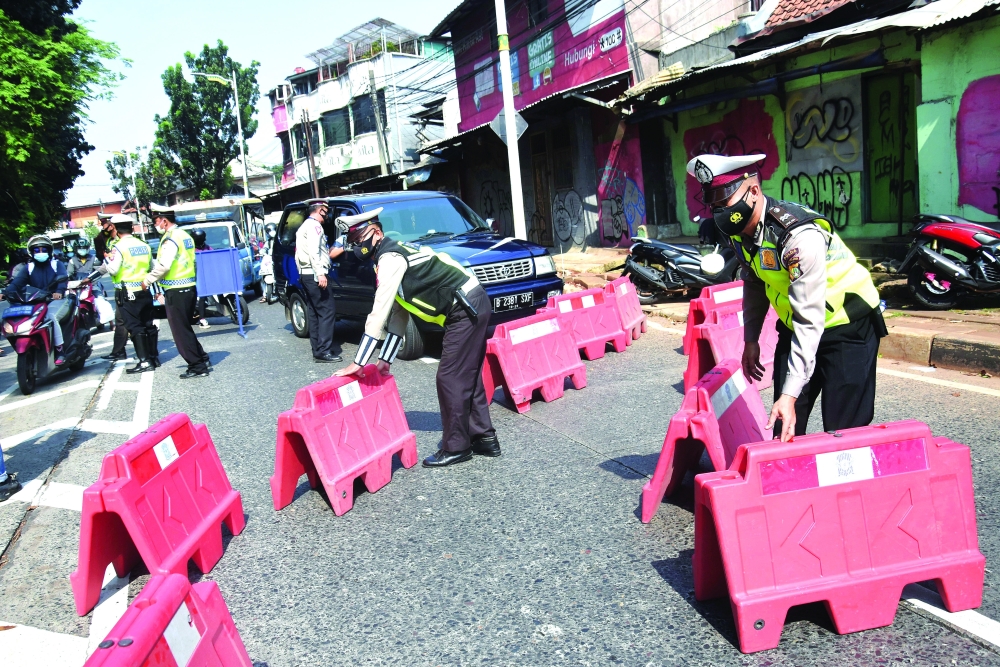





JAKARTA: Thousands of troops and police hit the streets of Indonesia's Java island and Bali Saturday to enforce new virus curbs as the Southeast Asian nation battles an unprecedented wave of Covid-19 infections.
The country's overwhelmed healthcare system teetered on the brink of collapse as jammed hospitals turned away patients, forcing desperate families to hunt for oxygen tanks to treat the sick and dying at home.
Hundreds of checkpoints were set up as mosques, parks, shopping malls and restaurants were shuttered across the capital Jakarta and hard-hit Java. Over 50,000 police and troops were deployed to enforce restrictions in areas home to more than 100 million people.
The rules also applied to Bali where police patrolled shuttered beachside eateries after the holiday island shelved plans to reopen to foreign tourists.
The world's fourth most populous nation has seen its daily caseload more than quadruple in less than a month with a new record Saturday of 27,913 cases logged in the past 24 hours and 493 official deaths -- less than Friday's record 539 fatalities.
Indonesia's tally to date stands at 2.25 million cases and 60,027 deaths -- making it one of Asia's worst-hit nations.
But that figure is widely believed to be a severe undercount due to low testing and poor tracing measures.
"The stricter restrictions came too late," said Jakarta resident Maya Puspita Sari.
"Before, people who got Covid-19 were strangers, but now it's also the people closest to me who are infected. "The virus is getting so much closer and it's terrifying."
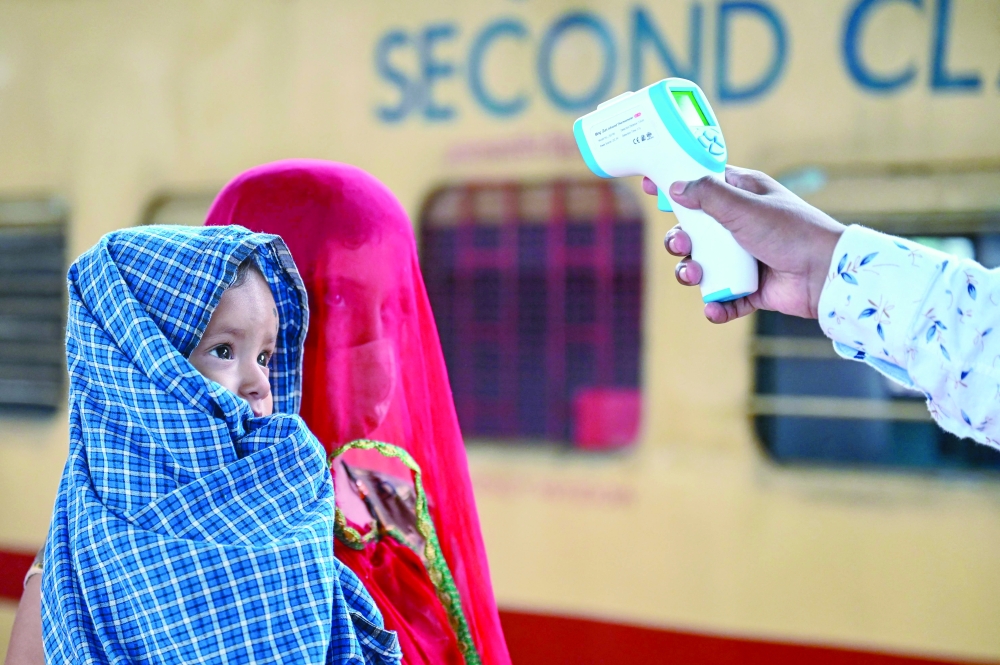
The highly infectious Delta variant of the virus, first identified in India and now present in at least 85 countries, was driving the recent surge, the health ministry said.
Experts had earlier warned that millions travelling at the end of Ramadhan could spark an explosion in cases. The streets of Jakarta were largely deserted Saturday but staying at home wasn't an option for many who live hand to mouth in a country of nearly 270 million.
"The measures need to be tougher, but please think about the little people like me," said 35-year-old Paijo as he struggled to find buyers for the instant coffee packages hanging from his bicycle.
"Of course I'm afraid... but this is my only livelihood and I'm supporting my wife and two kids."
Indonesian President Joko Widodo, better known as Jokowi, had long resisted the strict lockdowns seen in other virus-wracked nations, saying they could tank Southeast Asia's biggest economy.
But this week the government ordered all non-essential employees to work from home, while classes would only be held online.
The new measures are set to last until July 20 in the hopes of bringing daily infections below 10,000.
Health experts warned that the tougher measures may not be enough.
The restrictions still allow for often-jammed public transport to continue operating at a reduced capacity.
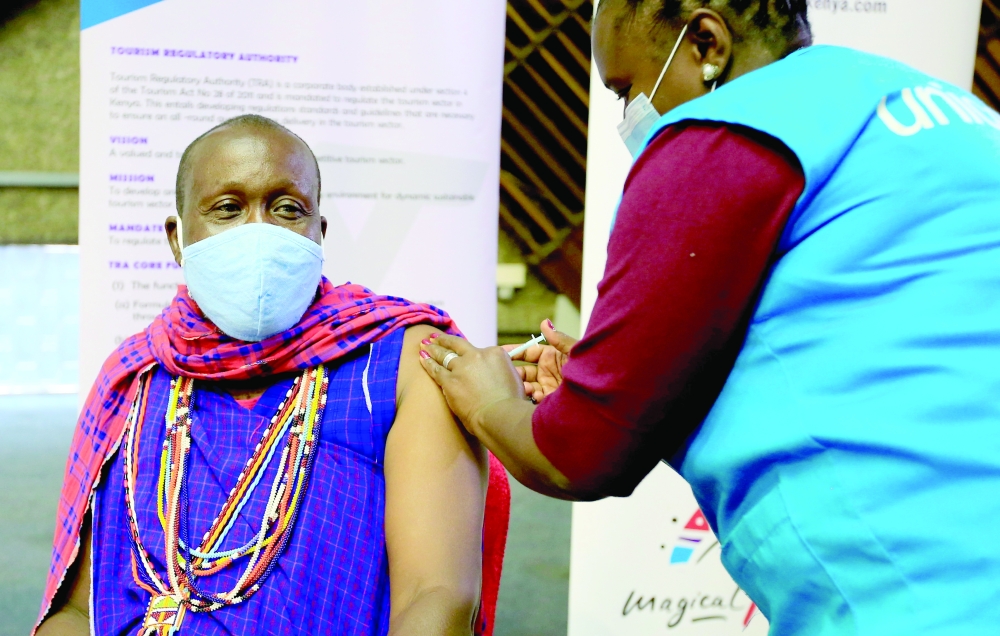
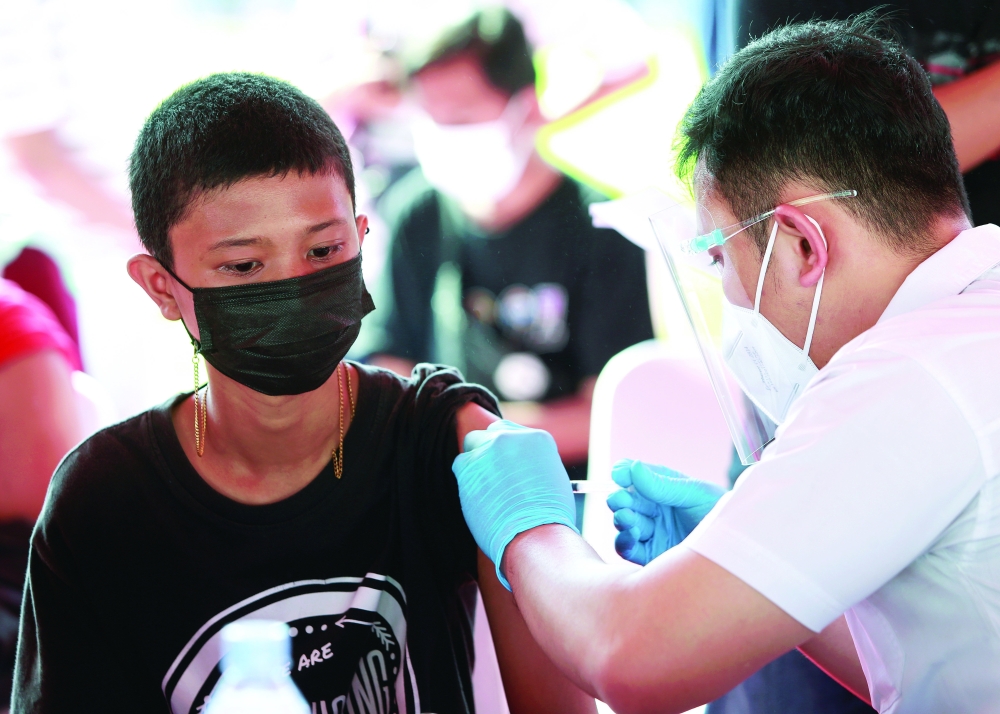
Domestic sea, air and bus travel was also still open to people who have at least one vaccine dose. "How do you do physical distancing on public transportation?" said Indonesian epidemiologist Windhu Purnomo. "The government is still prioritising the economy by letting people move around." - AFP
Oman Observer is now on the WhatsApp channel. Click here