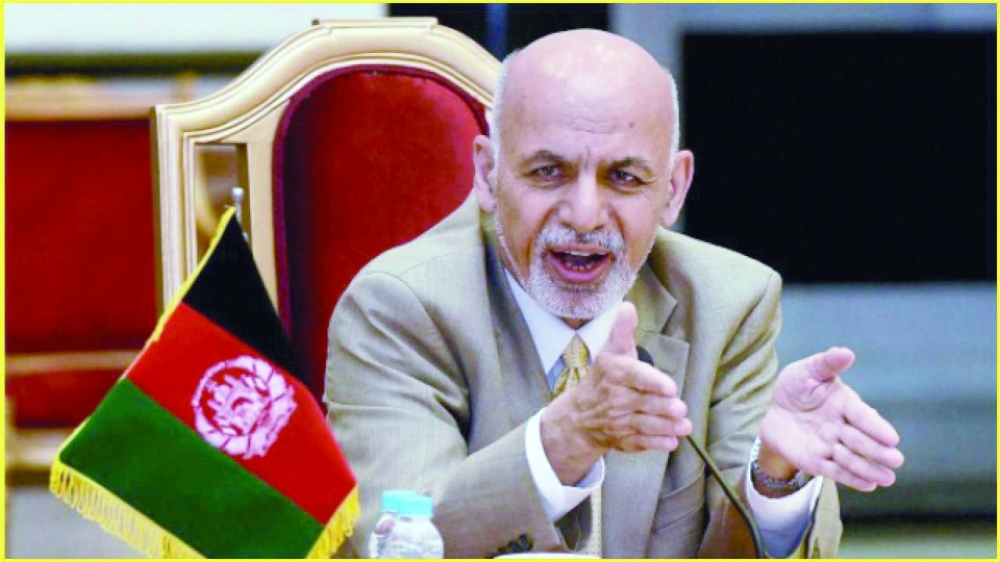





KABUL: Afghan President Ashraf Ghani has replaced his defence and interior ministers and the army chief of staff amid rising casualties among Afghanistan's security forces in sharply increased fighting with the Taliban.
The changes, announced late on Saturday by the presidential palace, come as Afghan security forces battle the Taliban in 28 of 34 provinces in the country, with the hardline Islamic group claiming more territory in recent weeks.
Bismillah Khan Mohammadi was appointed as caretaker defence minister replacing Asadullah Khalid, who had recently returned to the country after a prolonged illness while Abdul Sattar Mirzakwal was picked as new interior minister replacing Hayatullah Hayat.
A senior commander under late anti-Soviet resistance hero Ahmad Shah Massoud, Mohammadi has had a long military career and served as interior minister, defence minister and army chief of staff in the government of former president Hamid Karzai.
General Wali Mohammad Ahmadzai was appointed as the new chief of army staff, replacing General Yasin Zia, the palace said.
On Friday, 24 members Afghan special forces soldiers were killed and dozens more wounded during a fight to retake a district captured by the Taliban in northern Faryab province, security officials said.
The Taliban has staged a months-long campaign to expand its influence across the country as the United States has begun withdrawing troops from May 1 and closed some bases and handed them over to the Afghan government.
Since the United States announced plans in April to pull out all of its troops by September 11, at least 30 districts have been seized by the Taliban.
A security official speaking on condition of anonymity said there have been extremely high casualties among Afghan security forces, civilians as well as the Taliban in recent weeks as intense fighting rages on. No further details were immediately available.
Meanwhile, the Taliban said on Sunday they remain committed to peace talks but insisted a "genuine Islamic system" in Afghanistan was the only way to end the war and ensure rights -- including for women.
Talks between the militants and the Afghan government have been deadlocked for months and violence has surged across the country since May when the US military began its final withdrawal. Fears are also growing that if the Taliban return to power they will reimpose their harsh version of Islamic law, under which girls were banned from school and women accused of crimes such as adultery were stoned to death in stadiums.
Despite the rise in violence, Taliban co-founder and deputy leader Mullah Abdul Ghani Baradar said Sunday that the group was committed to the peace talks. - Reuters
Oman Observer is now on the WhatsApp channel. Click here